For many years, physical security was measured by the systems installed: cameras, access control readers, intrusion alarms, visitor logs, and monitoring arrangements. These remain important; however, expectations have changed as far as operational efficiency and outcome-based performance.
Today, the bigger question is whether these systems can work together to support a clear and timely response. A camera may record an incident, an alarm may be triggered, and an access event may show that a door was opened. But someone still needs to verify what happened, understand the context, and take the right action.
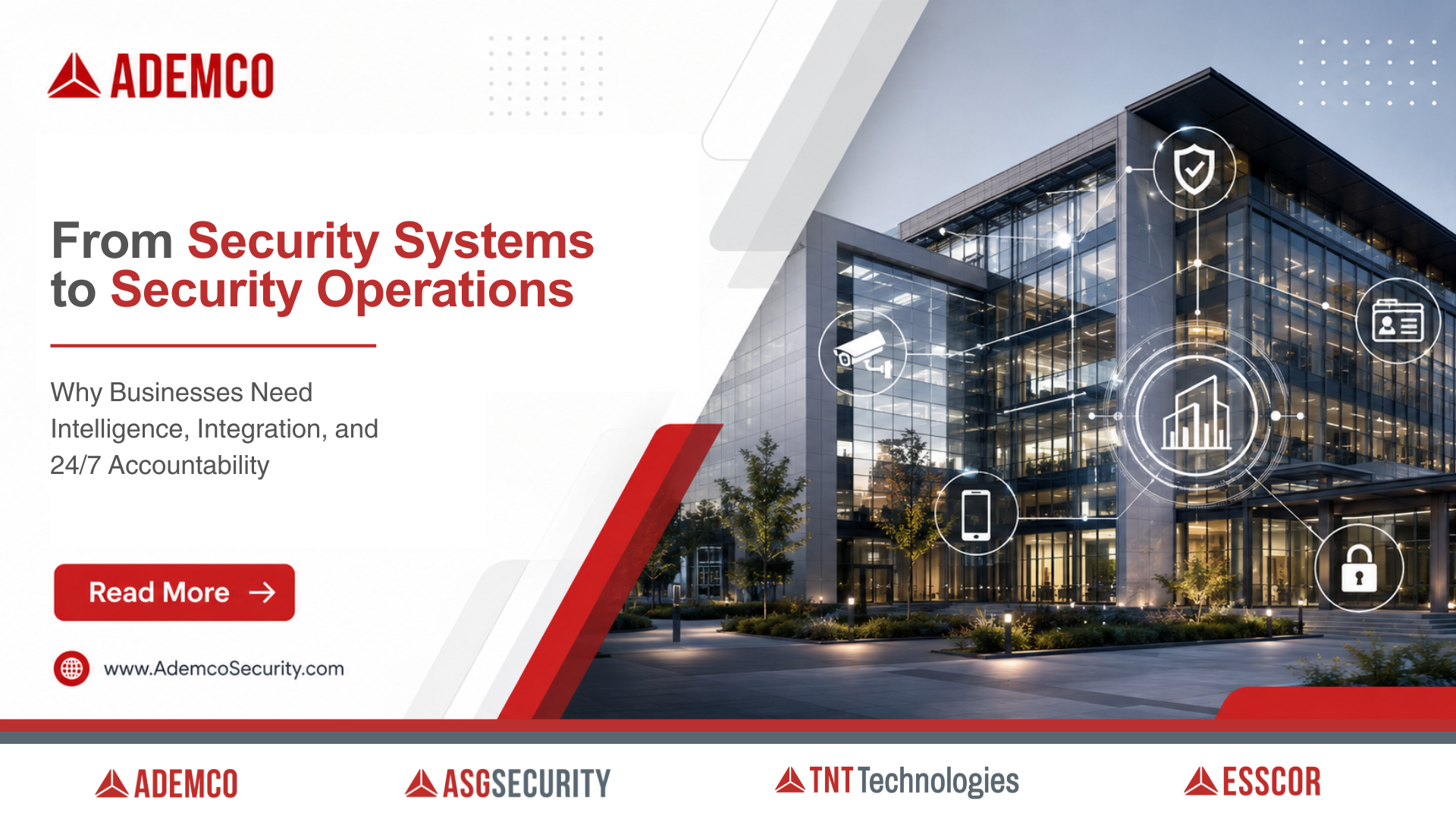
This is why physical security is moving from a system-based discussion to an operations-based one. Businesses are no longer only looking at individual security products. They are looking for integrated security solutions, streamlined workflows, greater visibility, accountability, and reliable 24/7 monitoring that can support daily operations and incident response.
What does it mean to move from security systems to security operations?
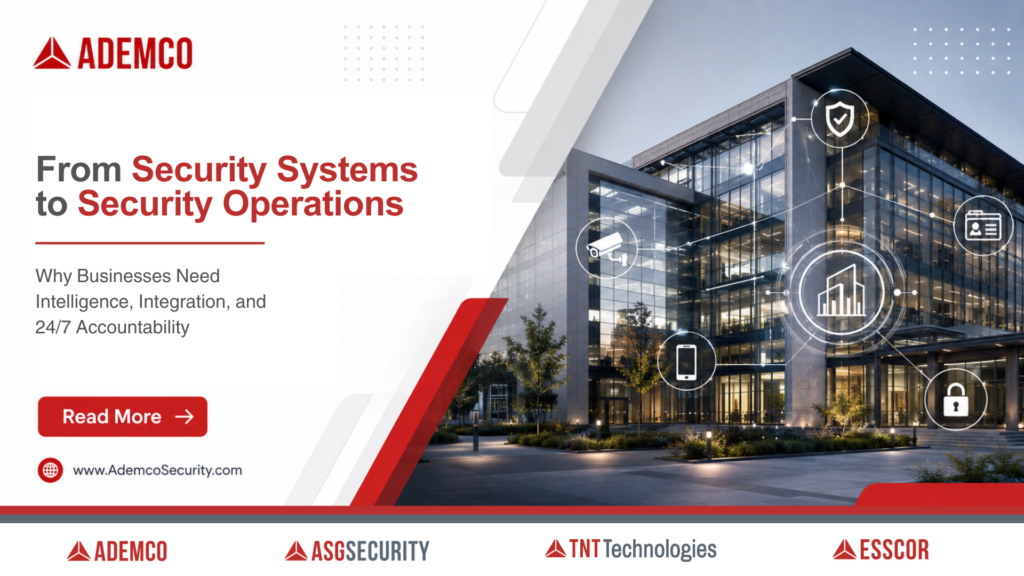
Moving from security systems to security operations means shifting the focus from individual devices to the way people, technology, workflows, and response processes work together.
A security system may detect, record, or restrict access. A security operation goes further.
This shift matters because real-world security events do not happen in isolation. A door access event, a sensor alert, a visitor exception, and visual movement across a site may all be connected. When these signals remain separate, teams may only see part of the situation. When they are connected through an integrated security operation, teams can respond with better context and confidence.
Why connected security systems matter
Security incidents rarely happen neatly within one system. For businesses with multiple facilities, this matters even more. A fragmented setup may be manageable at one site, but it becomes harder to control when operations expand across buildings, branches, warehouses, plants, or regional offices. A connected security operation gives organisations a more consistent way to manage risk at scale.
Integrated physical security also supports better reporting and accountability. Instead of reviewing different systems separately, teams can build a clearer incident record that shows what happened, when it happened, who was involved, and what actions were taken.
How vision intelligence adds value to connected systems
As security systems become more connected, visual information plays a more important role in helping teams understand what is happening across a site. Access records, alarms, sensors, and visitor logs can show that an event has occurred. But vision intelligence can help add the surrounding context.
For example, an access control system may show that a restricted door was opened after hours. On its own, that record may only confirm the time, location, and credentials used. When supported by vision intelligence, the team can better understand the situation: whether the person entered alone, whether there was tailgating, whether the movement looked unusual, or whether the event was connected to another activity nearby.
This is where intelligence adds value to connected systems. It helps move security teams from simply receiving alerts to understanding situations. Instead of treating every event as an isolated signal, visual context can help operators verify what happened, prioritise what needs attention, and respond with better confidence.
Why access control is now part of security operations
Access control has also changed. Traditionally, it was viewed mainly as a way to allow or restrict entry. Today, it plays a wider role in physical security operations.
Modern access control can support identity management, visitor access, contractor movement, temporary permissions, audit trails, emergency response, and compliance reporting. When connected with video surveillance and other systems, access events become more meaningful.
For example, an unauthorised access attempt is more useful when it can be matched with visual context. A visitor record becomes more valuable when it is linked to where the person entered, when they left, and whether access was limited to approved areas. In an emergency, access data can help teams understand who may still be inside a facility.
The rise of mobile credentials, biometrics, cloud-managed access control, and rule-based permissions also reflects a broader shift. Businesses want access systems that are not only secure but also easier to manage, more flexible, and better aligned with daily operations.
Access control should therefore be seen as more than a door-entry system. It is becoming an important source of operational data for safety, compliance, investigation, and business continuity.
How cloud and hybrid security models are changing deployment
Another major shift is the way security systems are deployed and managed. Some organisations remain fully on-premise because of infrastructure, regulatory, or operational requirements. Others are adopting cloud-based security systems for easier updates, remote management, and scalability. Many are moving toward hybrid security models that combine both.
This is a practical development. Not every business can or should move everything to the cloud immediately. Existing infrastructure, bandwidth, cybersecurity policies, storage needs, and site conditions all matter. A hybrid approach allows organisations to modernise gradually while keeping certain systems or workloads on-site where needed.
For security leaders, this creates a new requirement. They need solutions and partners that can work across different environments, including legacy systems, newer cloud platforms, edge devices, vision intelligence, access control databases, IoT sensors, and monitoring workflows.
The businesses that benefit most from cloud and hybrid security models are not simply the ones that adopt the newest platform. They are the ones who use these models to improve visibility, maintenance, resilience, and response.
Why technology still needs a clear operating model
A common mistake in security planning is assuming that better technology automatically creates better security. In reality, technology only works well when the operating model around it is clear.
When an alarm is triggered, who receives it? Who verifies the event? What information do they use? When should the incident be escalated? Who contacts the site, the facility manager, or emergency responders? How is the incident recorded?
These questions are not secondary details. They are the difference between a system that merely detects something and an operation that can act on it.
This is where many organisations start to rethink the role of managed security services and 24/7 security monitoring. For businesses with lean internal teams, multiple sites, after-hours risks, or critical environments, it may not be enough to rely only on local personnel or passive alerts. They need a structure that supports continuous oversight, verification, escalation, and accountability.
A 24/7 command and monitoring model can help close the gap between detection and action. It gives businesses a defined process for handling events, especially outside normal operating hours.
Why accountability is becoming part of security value
As physical security becomes more connected, the role of the security partner is also changing. Businesses are no longer only looking for someone to install devices. They need partners who can design the right architecture, integrate different systems, support daily operations, maintain uptime, and help improve the security environment over time.
This is where accountability becomes important.
A security setup may involve multiple brands, different sites, several stakeholders, and changing operational needs. Without clear ownership, issues can easily fall between parties. A more mature security operations model brings together design, implementation, monitoring, maintenance, response, and reporting. It also helps organisations move from simply owning systems to managing outcomes.
What should businesses look for in a modern security operations model?
As organisations review their physical security setup, the conversation should go beyond equipment specifications. The following questions are often more useful:
- Can our systems provide a clear view of what is happening across sites?
- Can access control, video, alarms, visitor management, and sensors work together?
- Can our team verify events quickly without switching between too many platforms?
- Are our alerts meaningful, or are they creating unnecessary noise?
- Can we support cloud, on-premise, or hybrid deployment based on actual operational needs?
- Do we have proper records for audits, investigations, and compliance?
- Is there a clear response workflow after office hours?
Do we have a partner responsible not only for installation, but also for long-term support and service continuity?
These questions help shift security planning from a product checklist to an operational framework. They also make it easier for businesses to identify gaps that may not be visible when looking at systems individually.
Conclusion: The future of physical security is operational
The future of physical security is not just about smarter cameras, newer access readers, or more advanced platforms. These technologies are important, but they are only part of the picture.
The larger shift is toward security operations that are more connected, more intelligent, and more accountable. Businesses need systems that can work together, insights that support real decisions, and service models that ensure someone is responsible when an event happens.
For organisations managing complex sites, regional operations, or critical facilities, this shift matters. Security is no longer just a system in the background. It is an ongoing operation that supports resilience, continuity, and trust.