For many years, access control was understood in a fairly straightforward way: it helped decide who could open a door.
That role is still important. But in modern buildings, the expectation has changed. Today, commercial facilities are no longer managing only permanent employees with fixed access cards. They are also managing visitors, contractors, tenants, vendors, facility teams, after-hours users, and access to restricted areas such as plant rooms, rooftops, server rooms, equipment rooms, and back-of-house spaces.
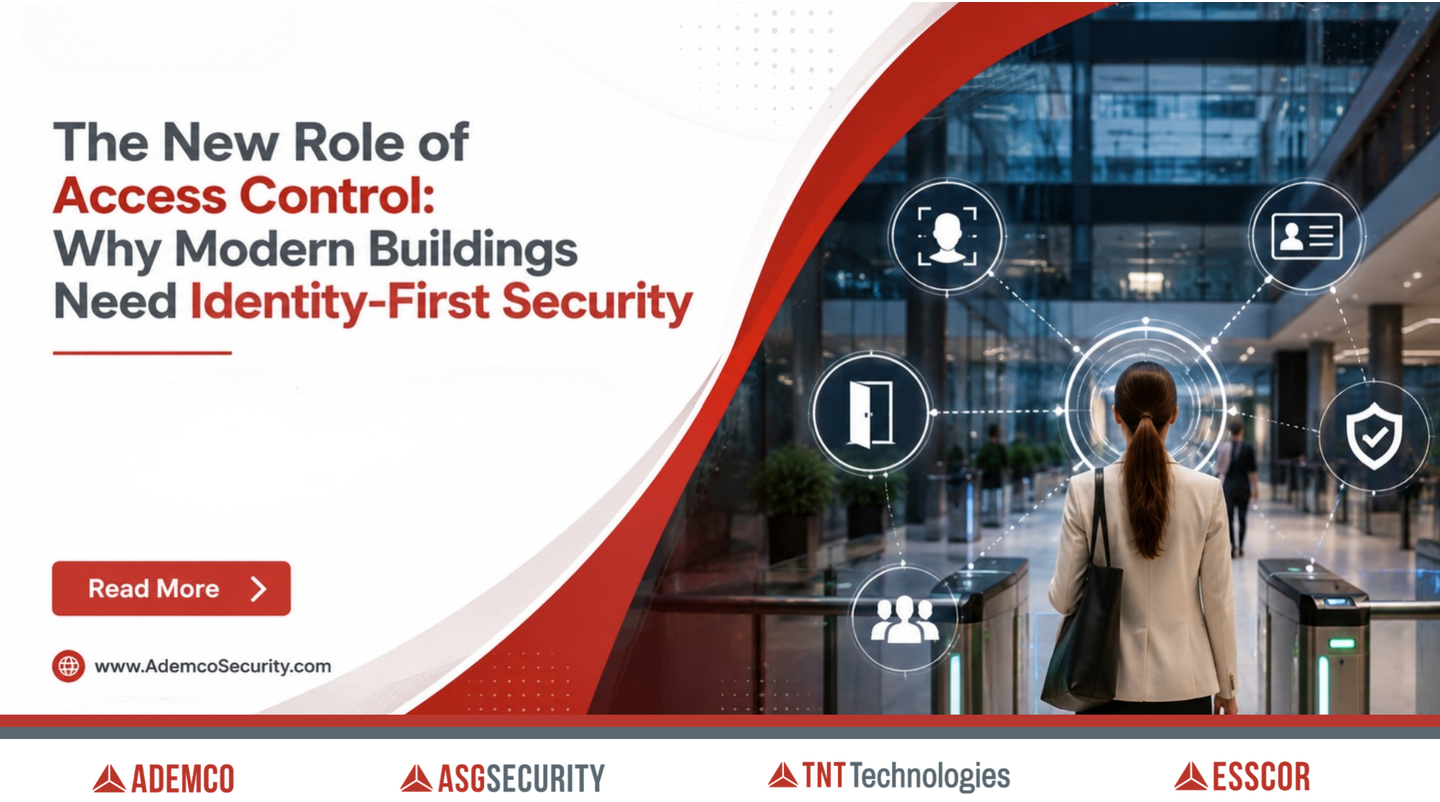
This makes access control more than a door-entry system. It is becoming a key part of how buildings manage identity, permissions, accountability, and response.
The question is no longer just, “Can this person enter?”
The better question is, “Who is this person, why are they here, where are they allowed to go, for how long, and can we verify it later?”
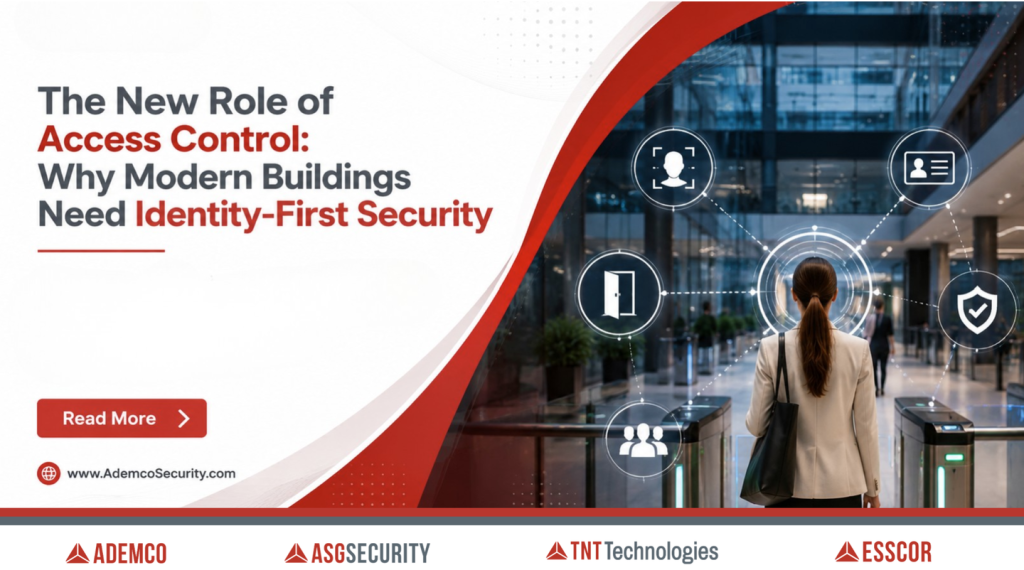
That is the shift toward identity-first security.
Why identity matters more now
Modern buildings are more dynamic than before. Work arrangements are more flexible. Contractors may enter after office hours. Visitors may be pre-registered before arrival. Different teams may need different levels of access depending on their role, work scope, timing, or area of responsibility.
At the same time, building owners and facility teams are expected to maintain stronger visibility and accountability. When something happens, they need to know who was on site, which areas were accessed, and whether the right permissions were in place.
This is why identity has become a more important starting point for physical security.
From fixed access to contextual access
Traditional access control often works on fixed permissions. Once access is granted, it may remain active until someone remembers to update or remove it.
That creates risk, especially in busy commercial environments.
Identity-first security takes a more contextual approach. Access can be based on role, time, location, approval status, visitor type, contractor schedule, or even specific operational needs.
This allows building teams to manage access more precisely. Permissions can be time-bound. Visitor access can expire automatically. Contractor access can be limited to approved areas and working hours. Higher-risk areas can require stronger verification, such as facial recognition or multi-step authentication.
This approach is especially useful for restricted-area access management, where the concern is not only whether the person is known, but whether they have a valid reason to be there at that specific time.
Access data is also operational data
One of the most overlooked values of access control is the record it creates.
Every access event can help answer practical operational questions:
Who entered this restricted room?
Was the contractor still on site after the approved timing?
Which door was used before the incident?
Who was in the building during a fire drill or emergency?
Can the facility team produce an audit trail quickly?
These are not abstract security questions. They are everyday operational concerns.
In an emergency, access records can support roll call and on-site accountability. During an investigation, access activity can provide useful context. For compliance or internal review, audit trails can show whether access was properly controlled.
This is where access control becomes more than a security layer. It becomes part of building operations.
When connected with visitor management, contractor management, video intelligence, alarm monitoring, and reporting workflows, access data can help teams make faster and better-informed decisions. It gives security and facility teams a clearer picture of what is happening across the building, instead of forcing them to piece together information from separate systems.
Why integration matters
A standalone access control system can secure a door. But modern buildings usually need more than that.
They need access control to work with visitor registration, contractor approvals, video systems, alarms, intercoms, emergency workflows, and monitoring teams. Without integration, each system may hold part of the truth, but no one has the full picture.
This is becoming more important as the security industry moves toward unified and outcome-based operations. The Security Industry Association’s 2026 Megatrends highlights that security solutions are losing their boundaries, and that the industry is shifting toward clearer end-user outcomes rather than purely transactional delivery models.
For building teams, this means the value of security is not measured only by how many devices are installed. It is measured by how well the system supports daily operations, reduces blind spots, improves response, and provides reliable records when accountability matters.
An access event should not be treated as an isolated entry log. It should be part of a bigger operational picture.
If someone enters a restricted area after hours, the system should help the team understand who entered, whether they were authorised, what activity was detected, and whether any follow-up action is needed. If a visitor has not checked out, the system should help identify whether the person may still be on site. If an emergency occurs, the team should be able to quickly generate a list of people who may be inside the building.
That is the practical value of connected access control.
Where AI and automation fit in
AI is now part of almost every security conversation, but it is important to keep the discussion practical.
In physical security, AI should not be seen as a replacement for human judgement. Its stronger value is in helping teams reduce noise, detect unusual activity faster, find relevant information more easily, and focus attention where action is needed.
Genetec’s 2026 State of Physical Security findings show that AI has become a top project priority alongside access control and video surveillance. End users are looking at AI for practical support, such as navigating alarms, supporting investigations, and reducing noise in busy environments.
For identity-first access control, AI and automation can support workflows such as unusual access detection, faster search across records, alert prioritisation, and better correlation between access activity and video context.
The future of access control is identity-first
Modern access control is no longer just about opening doors. It is about managing trust across the building.
It helps facility and security teams understand who is on site, what they are allowed to access, how long their permission should last, and what records are available when something needs to be reviewed.
For commercial buildings, this shift is especially important. With more people moving through shared spaces, more contractors supporting daily operations, and more restricted areas requiring proper control, identity-first security gives teams a more reliable way to manage access without adding unnecessary complexity.
As part of a connected security operations approach, access control can support visitor management, contractor access, restricted-area management, emergency accountability, audit reporting, and real-time monitoring.
This is where VerifSuite™ Business can help commercial facilities move beyond standalone access control. By connecting identity verification, centralised permissions, access records, and monitoring workflows, building teams can manage access with stronger visibility and greater accountability.
Because the future of access control is not only about who gets in.
It is about knowing who is there, why they are there, what they can access, and how quickly the team can act when it matters.