The long-term challenge isn’t building an FM platform, but keeping it supported, adaptable, and useful as building operations evolve.
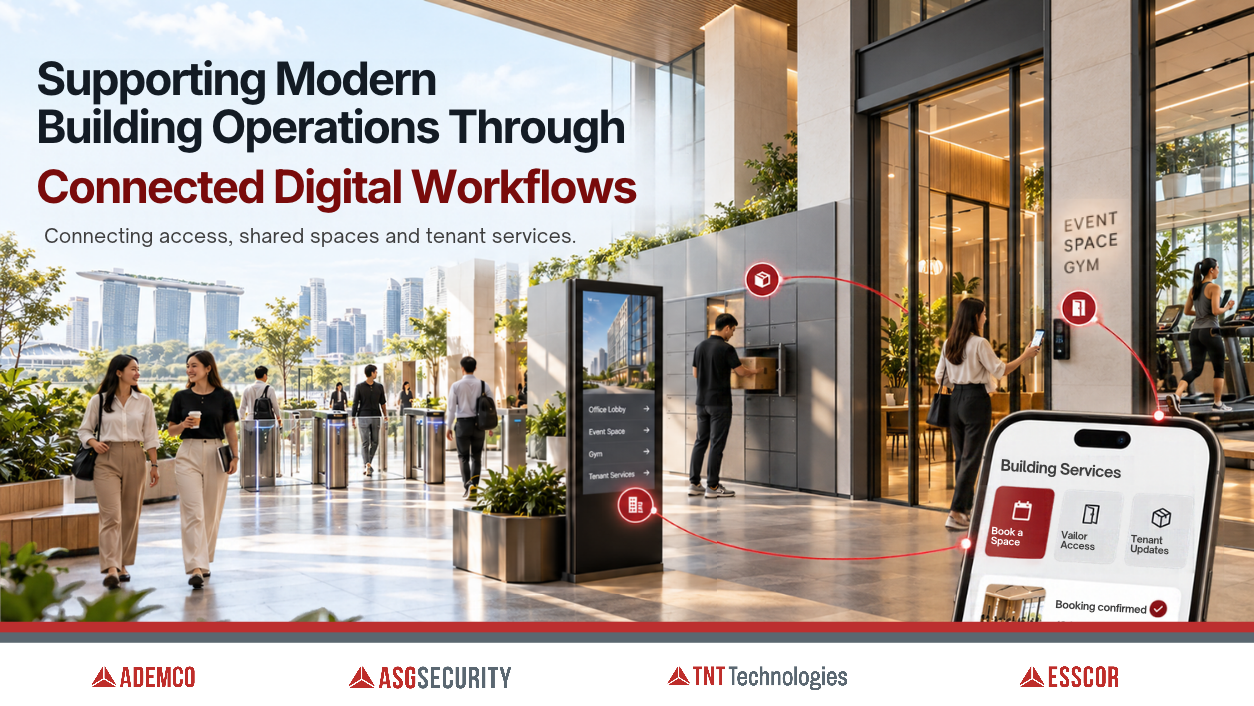
A building can serve many purposes within a single day. Office staff arrive for work, parents drop children off at a kindergarten, couriers deliver parcels, and visitors attend an evening event. A gym may open before the offices do, while a shared venue remains in use after most tenants have left.
For facility management (FM) teams, each activity brings different requirements for entry, bookings, communication, and security. Digital tools can help coordinate them, but the experience depends on how well those tools work together.
A booking made through an app should be able to move through the required approvals and access arrangements without staff repeatedly passing the same details between teams. This is where the scope of an FM platform matters: how effectively it connects the people, spaces, and services within the building.
What Does a Modern Digitised Building Need to Support?
A modern digitised building needs to accommodate different users, activities, and operating hours through convenient, controlled processes.
Consider a mixed-use property with offices, retail outlets, a kindergarten, a gym, and shared event facilities. These spaces may occupy the same development, but their users have different reasons for being there.
An employee needs regular access to an office. A gym member may enter early in the morning. An event guest needs access for one session, while a contractor may require permission to enter a service area.
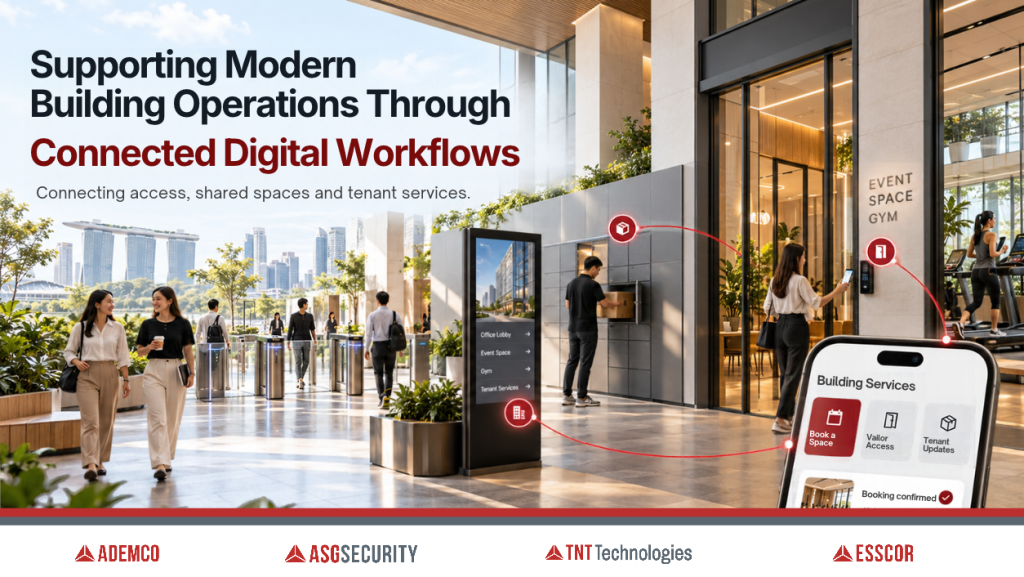
Tenant-facing services also extend beyond entry. Users may want to check a directory, receive building announcements, find tenant promotions, or book a shared facility from their phones.
The management platform needs to reflect these different journeys. A convenient experience gives each user a clear way to complete their task while allowing the building team to apply the appropriate rules.
How Can Booking, Access, and Communication Work Together?
Connected workflows allow an approved activity to trigger the necessary next steps, reducing repeated coordination between users, FM teams, and security personnel.
For example, a tenant books an event space for an evening session. In a connected arrangement, the process could work as follows:
- The tenant selects an available slot and submits the required details.
- The booking follows the property’s approval and payment requirements, where applicable.
- The organiser registers participants or sends invitations.
- Approved users receive entry instructions or credentials valid for the relevant time and area.
- The booking and associated access records remain available for review.
The exact workflow depends on the platform and connected systems. The practical benefit is that staff do not need to recreate the booking in a spreadsheet, email the participant list, and separately WhatsApp security to arrange entry.
Routine steps can follow an agreed process, leaving staff to handle exceptions that require attention.
Why Does a More Open Building Need More Precise Security?
As more groups use a building at different times, access needs to distinguish who may enter each area and when.
A publicly accessible lobby does not make every floor or facility open to everyone. An event guest may need access to the venue and its designated route, while office floors and service rooms remain restricted.
Similarly, a delivery person collecting or dropping off a parcel should not automatically receive the same access as a tenant. A kindergarten may require its own authorised collection arrangements, separate from the wider property’s visitor process.
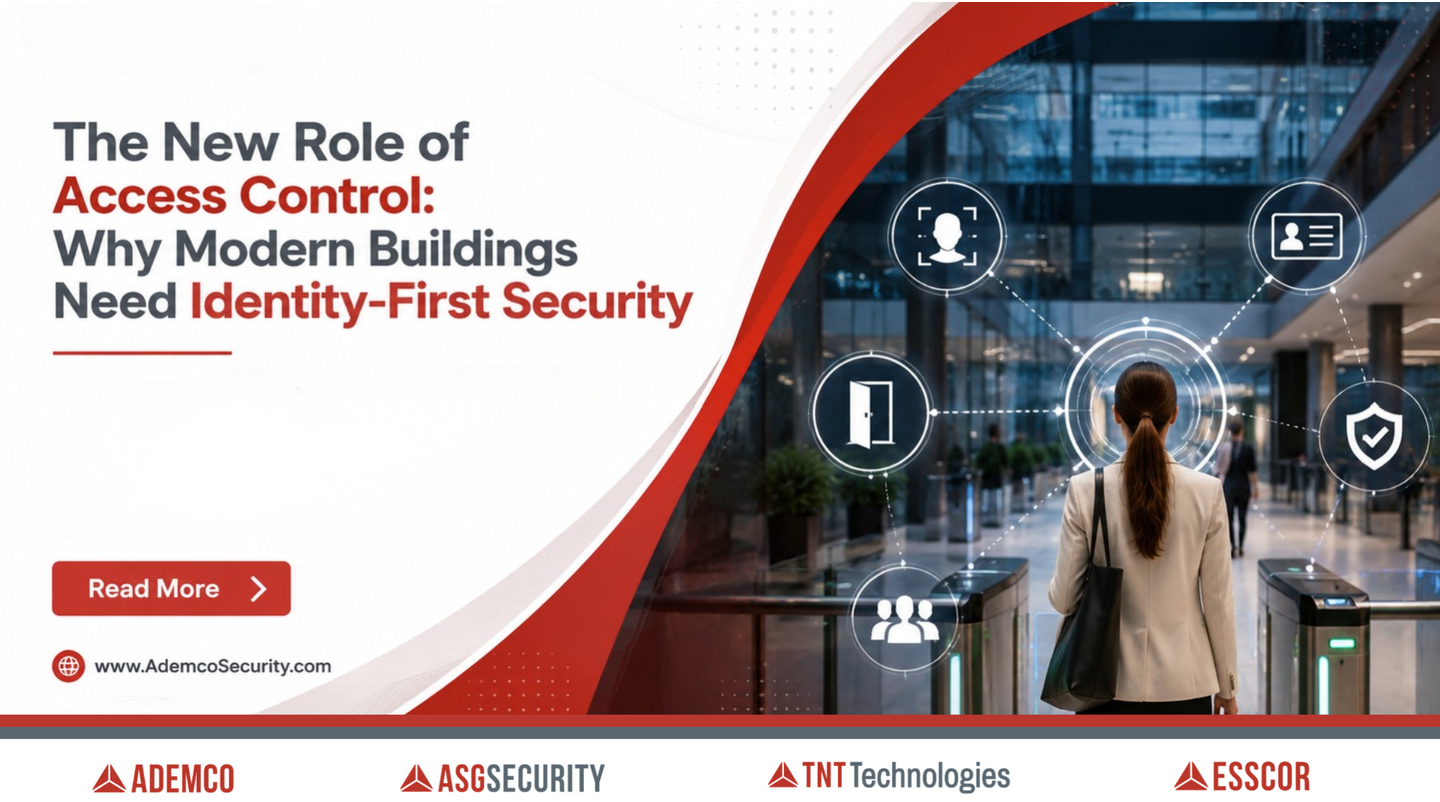
Flexible building use therefore calls for permissions linked to a person’s role, purpose, location, and approved timing. Appropriate entry records also help teams review activity when an enquiry or incident arises.
These controls can support convenience: users know where they are permitted to go, and staff have fewer routine access decisions to coordinate manually.
Where Can Separate Digital Tools Leave Gaps?
Gaps arise when individual functions are digital but staff must still connect the steps manually.
A property may already have an online booking form, visitor registration software, access control, and a tenant app. Each can perform its own function while the overall process still depends on someone transferring information between them.
For instance, a cancelled booking may need a separate action to withdraw access. A change in an event’s timing may need to be communicated to several teams. If these steps are missed, the records and access arrangements may no longer match.
A platform originally configured for simpler administrative tasks may need additional capabilities to support these connections. The useful assessment is whether it can handle the building’s required workflows, either directly or through suitable integrations.
What Integration Possibilities Should Building Teams Consider?
Integration priorities should follow the user journeys and operational tasks the property wants to improve.
Possible connections include:
- Facility booking and access control: Linking approved reservations to access for the booked period.
- Delivery systems and smart lockers: Connecting authorised delivery activity with parcel placement and recipient notifications.
- Visitor and event registration: Carrying approved participant details into the entry process.
- Tenant apps and digital directories: Providing building information, tenant listings, announcements, and promotions through accessible channels.
These are possibilities to assess, rather than functions every platform automatically provides. Compatibility, available interfaces, service responsibilities, and the property’s security rules will influence what can be connected.
Starting with a specific journey, such as booking and entering an event space, helps teams identify which connections would deliver practical value.
When Is It Time to Review the Existing FM Platform?
A review is useful when new building activities require more manual work than the existing platform can reasonably support.
Adding shared facilities, extending operating hours, or introducing new tenant services can change what the management team needs from its systems.
Before commissioning another platform, teams should establish what can be configured or integrated within the current environment. Where a replacement is needed, its scope should address the complete workflow, including user onboarding and ongoing support.
This keeps the decision focused on operational outcomes. The aim is to give people an easier way to use the building while reducing the coordination required behind the scenes.
How Can VerifSuite Business Support Connected Building Operations?
VerifSuite Business brings access, visitor, contractor, and facility management activities into a connected environment to support everyday building operations.
It supports access management for different user groups, visitor and contractor records, and facility-related activities across a single property or multiple sites. Permissions can be structured around approved areas and times, helping teams manage different access needs.
VerifSuite Business follows a pay-as-you-use model with consistent platform support and lifecycle management. This provides a basis for discussing both the initial deployment and how the service can support changing operational needs.
A modern building’s digital experience is shaped by what happens between a request and its completion. When bookings, permissions, communications, and records work together, users can move through their activities more easily, and FM teams can manage a more flexible property with clearer control. That is the standard against which a building management platform should be assessed.
Planning More Connected Building Operations?
Speak with Ademco about your property’s booking, access, and tenant service requirements, and explore how VerifSuite Business could support them.